Why Individual Development Goal Setting Matters
In today’s fast-paced business environment, developing leaders and empowering employees isn’t just “nice to have” — it’s essential to organizational success. At the heart of that development is individual goal setting: a structured process where managers and team members collaboratively define clear, meaningful goals that drive both performance and personal growth.
That’s why the BLOOM leadership platform emphasizes this practice — helping leaders make roles clear, align team members to a growth plan, and support the development needed to achieve that plan.
The BLOOM Approach to Individual Goal Setting
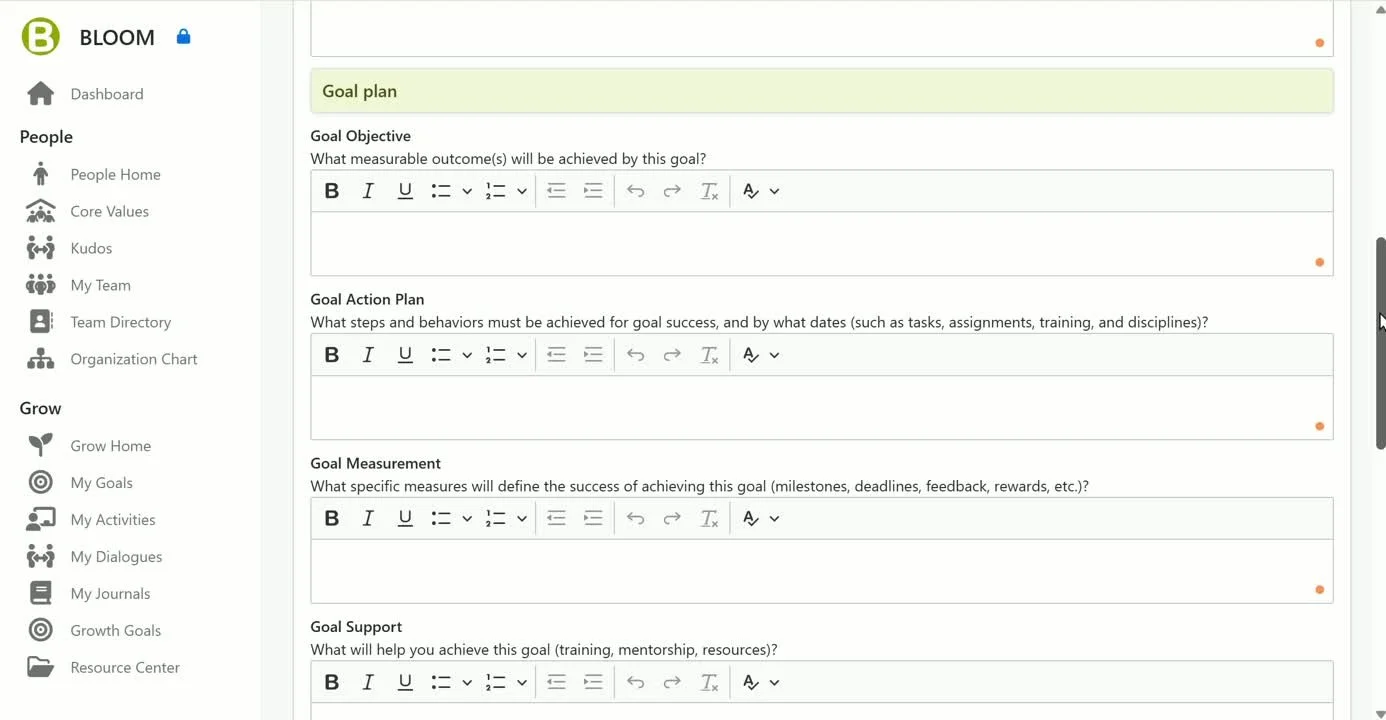
BLOOM’s approach to individual development goals is built on practical steps that support clarity, relevance, and ongoing dialogue between managers and employees. As outlined in our knowledge base, the key elements include:
Helping managers set and track meaningful goals with their team members.
Encouraging strong supervisory relationships, which research shows greatly impacts employee retention.
Limiting open goals (for example, no more than four at a time) to keep focus sharp.
Holding regular one-on-one reviews to discuss progress and keep goals relevant.
Collaborating with HR on evaluation forms that deepen ongoing dialogue about development and achievement.
This process isn’t simply administrative — it’s relational and developmental. It positions goal setting as a living, dynamic tool rather than a static checklist tucked into an annual review.
Why Goal Setting Is So Important for Development — and for Retention
Research across organizational psychology and human resources consistently shows that effective goal setting increases engagement, motivation, and performance — all of which influence job satisfaction and retention.
1. Clear Goals Give Direction and Purpose
Goals serve as a roadmap that helps employees understand expectations and how their work contributes to larger outcomes. When team members know what’s expected and why it matters, it reinforces their engagement and alignment with organizational objectives.
2. Goals Support Motivation and Performance
Goal-setting theory — one of the most empirically supported frameworks in organizational behavior — shows goals boost motivation, focus, and effort. When goals are clear, specific, and challenging, employees are more likely to persist and perform at higher levels.
That motivational boost isn’t just about hitting numbers, it’s about feeling competent and purposeful within a role — a key driver of job satisfaction.
3. Development Goals Anchor Career Growth
Employees increasingly value opportunities for growth. When goals include skill building, career progression, and personal development, they transform work from simply “tasks to complete” to steps toward a future people care about.
Providing a clear path for development tells employees that the organization invests in them as individuals, not just as cogs in a machine. This investment fosters loyalty and reduces turnover.
4. Regular Dialogue Builds Psychological Commitment
Goal setting done in isolation is far less effective than goals discussed collaboratively. Having regular conversations about goals — as BLOOM encourages through monthly reviews — strengthens the employee-manager relationship, reinforces accountability, and creates psychological safety around growth and feedback.
Employees who feel heard, supported, and invested in are less likely to look elsewhere — in other words, retention goes up when people feel their goals matter.
What This Means for Leaders
As the workplace evolves, people understand that a “good job” is no longer just compensation and stability — it’s about fulfillment, development, and connection. Leaders who take time to co-create meaningful goals with their teams lay the foundation for:
Better job performance and productivity.
Higher employee engagement and satisfaction.
Stronger alignment between individual development and corporate strategy.
Reduced turnover and increased retention.
And because these conversations are built into the BLOOM platform, they become part of a sustainable leadership routine practice rather than a “once a year” event.