Team Leadership Resources

Preparing for Your Performance Review: A BLOOM Guide for Employees
Employees must be prepared for effective performance dialogues. We believe that performance conversations are most effective when they are built on self-awareness, honest reflection, continuous feedback, and a shared commitment to growth. A performance review is not simply an evaluation of past results—it is an opportunity to strengthen alignment, clarify expectations, and create a development plan for future success.

Why New Leaders Burn Out — And How to Prevent It
There’s a pattern I’ve seen repeatedly with new leaders. They’re capable. They’re driven. They care deeply about their team. And they’re exhausted. Not because they can’t handle hard work. But because they’re carrying invisible weight. Burnout in new leaders rarely comes from effort alone. It comes from emotional strain, unclear expectations, and trying to lead without structure. If you’re a new leader and you feel tired in a way that sleep doesn’t fix, this may be why.

From High Performer to High-Impact Leader: What Changes?
One of the biggest transitions in a young leader’s career is this: You were promoted because you were excellent at doing the work. Now you’re responsible for other people doing the work well. That shift sounds small. It isn’t. It changes how you measure success. It changes how you spend your time.
It changes how you think. And if you don’t intentionally adjust, you’ll stay a high performer — but never become a high-impact leader.

Feedback Isn’t Awkward — It’s a Leadership Skill
If you’re a young leader, there’s a good chance you care deeply about your team. You want strong relationships.
You want people to feel valued. You want a healthy culture. And because you care, feedback can feel… awkward. You don’t want to discourage someone. You don’t want to damage trust.
You don’t want to come across as harsh. So you soften it. Delay it. Or avoid it. But here’s the truth: Avoiding feedback doesn’t protect relationships. It weakens them. Feedback isn’t awkward. It’s a skill. And like every leadership skill, it requires structure and intentional practice.

You Don’t Need More Motivation. You Need Alignment
If you’re a young or new leader, you’ve probably been told your job is to “keep the team motivated.” So you check in. You encourage. You celebrate wins. You try to create positive energy. But here’s what I’ve learned: Most teams don’t struggle because of low motivation. They struggle because of low alignment. Motivation is emotional. Alignment is structural. And structure is what sustains growth.

Why the Best Young Leaders Don’t “Wing It” — They Use a System
There’s a quiet pressure on young leaders that no one talks about. You get promoted because you’re capable. You work hard. You produce results. People trust you. And suddenly you’re responsible for other people’s performance, development, motivation, and accountability. No one hands you a playbook. So many young leaders do what they’ve always done when they don’t know something — they figure it out as they go. They “wing it.” They rely on instinct. They copy what they’ve seen. They try to be approachable, positive, and supportive. But leadership isn’t something you improvise your way through. The best young leaders don’t wing it. They use a system.

Team Leadership Is a Skill, Not a Personality Trait
Too often, leadership is treated like a personality trait—you either “have it” or you don’t. In reality, effective team leadership is a set of intentional, learnable skills that must be practiced consistently. The most impactful leaders aren’t just inspiring, and they aren’t just firm. They do something far more difficult: they inspire people while holding them accountable.
Why Individual Development Goal Setting Matters
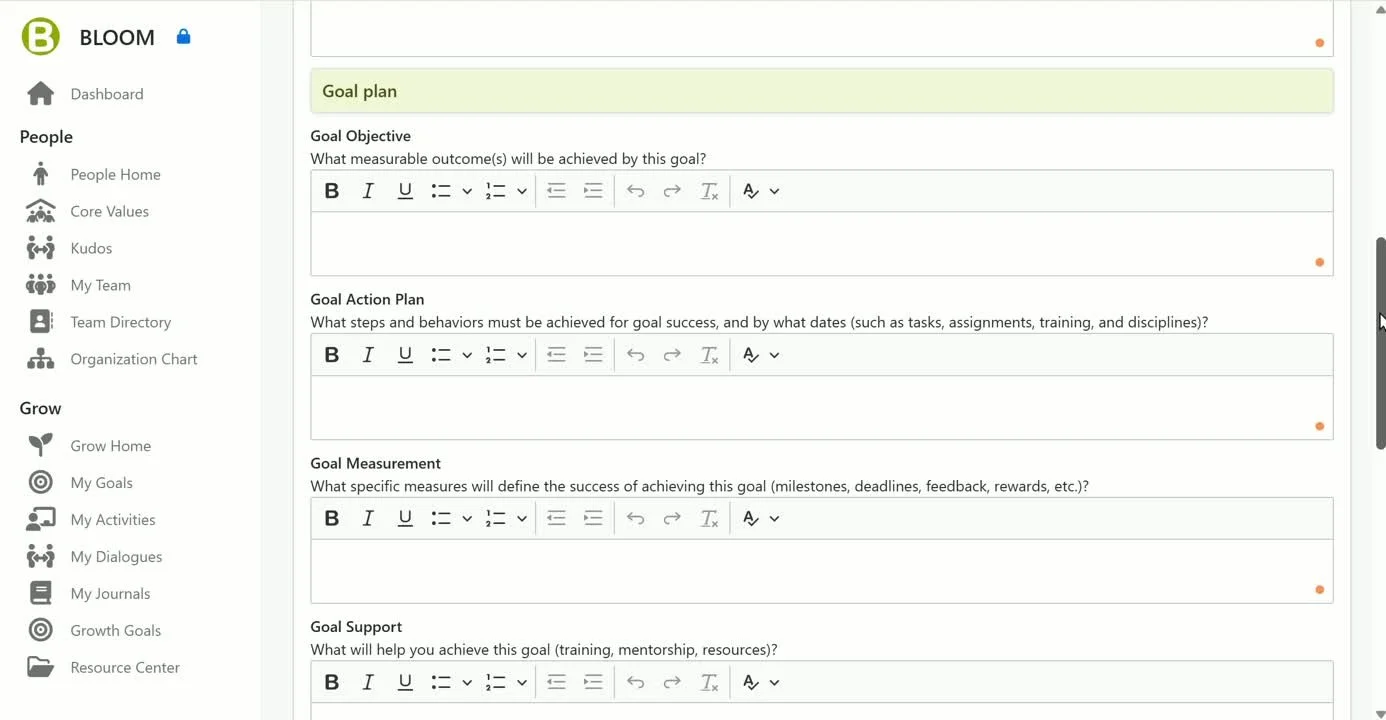
In today’s fast-paced business environment, developing leaders and empowering employees isn’t just “nice to have” — it’s essential to organizational success. At the heart of that development is individual goal setting: a structured process where managers and team members collaboratively define clear, meaningful goals that drive both performance and personal growth.

Support Your Managers with Routine Team Performance Dialogues
We developed the BLOOM® performance management system to take bigger picture questions into account, and you should be asking those questions if you’re not already. Specifically:

Understand the Components of Talent Management
When thinking about your organization’s future, it’s important to think not only about goals, objectives, and initiatives, but obviously how to achieve them. A major contributor is obviously your employees.

Simplify! Performance Management That Really Works!
Think about why and how you use (or would use) a talent management system. Just to keep track of employee performance and compensation data?

Transparency in Talent Planning & Performance Management
Before the economic downturn, SHRM reported in 2006 that 40% of workers were likely to change jobs when the economy turns. Has it happened? At Insight, we have used this statistic for years.

Start your journey
14 days free. No credit card. No commitment.